

Puerto Rico Real Estate Market Report — July 2026
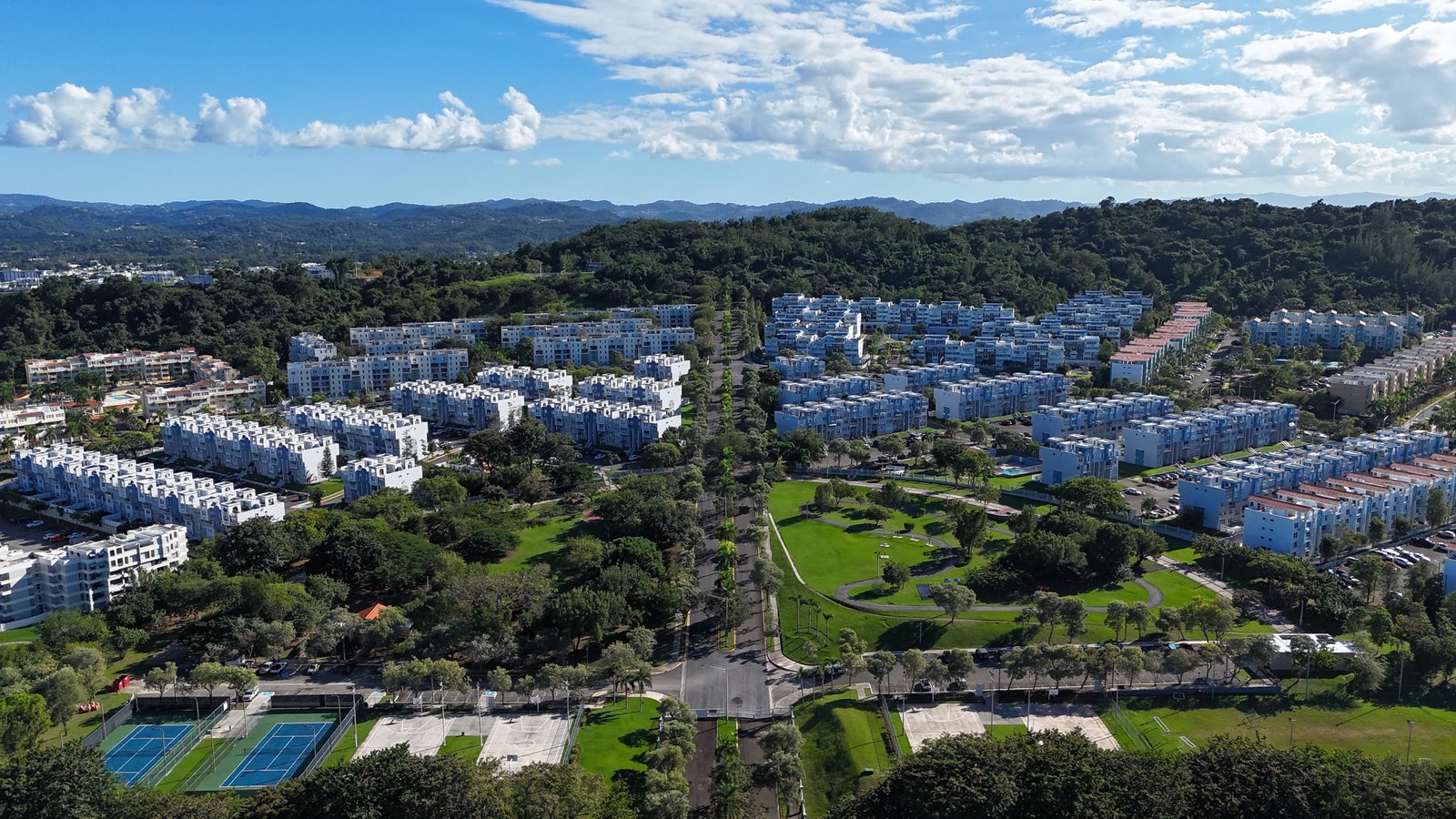
Puerto Rico’s housing market keeps sending mixed signals depending on where you look — double-digit price growth in some corridors, a buyer’s market in others, and financing conditions that have barely moved all year. Whether you’re buying, selling, or investing, knowing which numbers apply to your specific situation matters more than any single headline.
Below, we break down the data on prices, inventory, days on market, mortgage rates, and regional differences across the island — plus the government programs that could change your numbers going in.
1. Home Prices: Still Climbing, But Unevenly
Appreciation across the island remains strong, but it is far from uniform between segments:
- Island-wide median home price across all segments reached $385,000 in Q1 2026, up 6.2% year-over-year (Stellar MLS closed-sale data, Puerto Rico Real Estate Market Report, published March 2026).
- The Federal Housing Finance Agency’s purchase-only House Price Index for Puerto Rico rose 14.95% year-over-year in Q4 2025 — the third-largest annual gain since Q1 2021 — and 13.41% quarter-over-quarter, the sharpest quarterly jump in eleven years (FHFA, Q4 2025 data).
- The luxury segment ($1M+) is running even hotter: median price around $2.4 million, up 8.1% year-over-year, with corridors like Dorado Beach ($820 per square foot, +14% YoY) and Palmas del Mar ($580,000 median, +5.8% YoY) posting some of the island’s strongest gains.
- On the more accessible end, realtor.com’s June 2026 snapshot put the island-wide median listing price at $546,000, with homes selling about 4.32% below asking on average (a 96% sale-to-list ratio) — a reminder that “listing price” and “closed price” tell different stories depending on the source.
Appreciation is real, but it’s concentrated — comparing your property against closed sales in your specific neighborhood matters more than any island-wide average.
2. Inventory: Still Tight, Especially Where Demand Is Strongest
Supply conditions vary sharply by price point and location:
- Active listings island-wide stood at roughly 4,200 in Q1 2026, down 12% from a year earlier (Stellar MLS, March 2026).
- Weighing OCIF’s home-sales pace (7,601 closings in the first nine months of 2025, annualizing to roughly 10,100 per year) against that 4,200-listing inventory, the island is running at an estimated 5 months of supply — right at the line between a balanced and a seller-favoring market, and considerably tighter in high-demand micro-markets.
- Some luxury corridors are far tighter still: Dorado Beach had only about 12 active listings as of March 2026, with most transactions happening off-MLS through direct broker relationships.
- 41% of Q1 2026 sales closed at or above list price — the highest share in five years (Stellar MLS, March 2026), a clear seller-market signal in competitive segments.
- Zooming out to June 2026, realtor.com characterized Puerto Rico overall as a buyer’s market, with supply outpacing demand island-wide — a reminder of how much the story changes depending on price point and location.
Sellers of well-priced homes in supply-constrained areas (San Juan metro, the north coast resort corridors) still hold real leverage. Buyers have more negotiating room outside those pockets, and in the broader segments below $500,000.
3. Days on Market: Homes Are Moving, But Pace Varies by Zone
Average days on market across all segments was 68 days in Q1 2026, flat versus Q4 2025 (Stellar MLS, March 2026). By zone:
- Dorado Beach: ~28 days (most sales off-market)
- St. Regis Bahia Beach (branded residences): ~38 days
- Condado (condos): ~52 days
- Guaynabo / Santurce: ~58 days
- Palmas del Mar: ~61 days
- West coast (Rincón / Isabela): 55–70 days
- Old San Juan: ~74 days
A range of nearly fifty days separates the fastest- and slowest-moving submarkets. Sellers should set expectations by neighborhood, not island average — and buyers in slower zones may have more time, and leverage, to negotiate.
4. Mortgage Rates & the Financing Environment
Financing costs have been stable rather than falling this year:
- The national average 30-year fixed mortgage rate stood at 6.48% as of July 1, 2026, down slightly (0.08 points) from the prior week; the 15-year fixed averaged 5.67%; the 30-year jumbo averaged 6.50% (Forbes Advisor / Mortgage Research Center, July 1, 2026).
- The Federal Reserve has held its benchmark rate at 3.50%–3.75% through the first half of 2026, after three cuts in the final quarter of 2025 — meaning mortgage rates have held fairly steady, not dropped further, so far this year.
- FHA loans remain a popular path for Puerto Rico buyers: down payments as low as 3.5%, and a San Juan-metro loan limit of $690,000 for 2026 — open to any qualified buyer, not just first-timers.
- Total residential mortgage loans outstanding across the island’s financial institutions rose 4.8% year-over-year to $11.35 billion by mid-2025, while foreclosures fell 40% in the first three quarters of 2025 to 555 units — both signs of a healthier lending environment than a few years ago (OCIF data).
Rates aren’t falling fast, so it rarely pays to wait on the sidelines for a big drop. Get pre-qualified, understand your FHA and other financing options, and build today’s roughly 6.5% rate into your affordability math.
5. Regional Snapshot: San Juan Metro vs. the Rest of the Island
“The Puerto Rico market” is really several markets moving at different speeds:
- San Juan metro core (Condado, Old San Juan): Condado condos median $695,000 (+3.2% YoY), single-family homes around $1.15M; Old San Juan median $445,000. Both are supply-constrained, walkable, lifestyle-driven markets.
- Suburban San Juan metro (Guaynabo — Torrimar, Garden Hills, Monte Claro): median $425,000, more accessible price points with gated-community living; Santurce median $310,000.
- North coast resort corridor (Dorado Beach, Bahia Beach, Palmas del Mar): the island’s hottest luxury markets, driven heavily by Act 60 relocation demand, with prices climbing 6–14% annually and inventory often measured in the dozens rather than the hundreds.
- West coast (Rincón, Isabela): medians of $385,000 and $340,000 respectively, driven by remote-work migration and surf/lifestyle buyers, with oceanfront properties commanding $700,000–$1.5 million.
Location-specific data should drive your pricing and offer strategy — island-wide averages can be misleading in either direction.
6. Government Programs & Incentives to Know
A few programs are worth checking before you assume you know your financing options:
- PRDOH Homebuyer Assistance Program (HBA): funded through CDBG-DR / CDBG-MIT recovery funds, this program can cover up to 100% of the down payment and reasonable closing costs for qualifying low-to-moderate-income (LMI) and Urgent Need buyers — up to $45,000 for most eligible households, or up to $55,000 for Critical Recovery Workforce members (teachers, healthcare workers, police, firefighters, and other essential-service professionals). An additional $5,000 is available for homes purchased in a PRDOH-certified urban center (recuperacion.pr.gov, accessed July 2026).
- Eligibility is income-based (roughly 80% of area median income for most household sizes) and the property must be an existing, move-in-ready single-family home.
- Act 60 continues to be the single biggest driver of luxury and relocation demand in corridors like Dorado, Bahia Beach, and Condado — a factor to weigh heavily if you’re pricing or buying in those zones.
- FHA financing (3.5% down, $690,000 San Juan-metro loan limit) remains one of the most accessible paths to homeownership for local buyers island-wide.
If you’re a first-time buyer, or work in a critical-recovery profession, the HBA program can meaningfully change your down payment math — it’s worth checking eligibility before assuming you need 20% down.
What This Means for You
- Buyers: rates are stable near 6.5%, not falling — get pre-qualified now and use financing programs (FHA, HBA) to strengthen your position rather than waiting for a rate drop that may not come this year.
- Sellers: pricing and days-on-market vary enormously by neighborhood; a home in a supply-constrained pocket (San Juan metro, north coast resorts) can still command list price or better, while other areas call for more competitive pricing.
- Investors: rental yields averaged 7.09% island-wide in Q1 2026 (up from 5.26% a year earlier), with Isla Verde (7.21% average) outperforming San Juan proper (4.18% average) — location matters as much for cash flow as it does for appreciation.
Want to know how these numbers apply to your specific property, neighborhood, or investment goals? Reach out and we’ll break it down together.
*The data, statistics, and market trends presented in this MoveIQ report are compiled from Stellar MLS closed-transaction data, the Federal Housing Finance Agency, the Office of the Commissioner of Financial Institutions (OCIF), Forbes Advisor / Mortgage Research Center, realtor.com, and the Puerto Rico Department of Housing. Values are shown as indices for illustrative and educational purposes and do not represent specific prices, individual appraisals, or investment advice. Always verify current figures and program eligibility directly with the source before making a financial decision.*
MoveIQ by Carrion Real Estate
Smart decisions begin with good information.